
25 September 2026•5 min read
What Is a Thermal Break Aluminum System? A Saudi Buyer Guide
Practical guidance from Ramz Al Badran's factory in Riyadh on thermal break aluminum — what to specify, what it costs and how it performs in the Saudi climate.
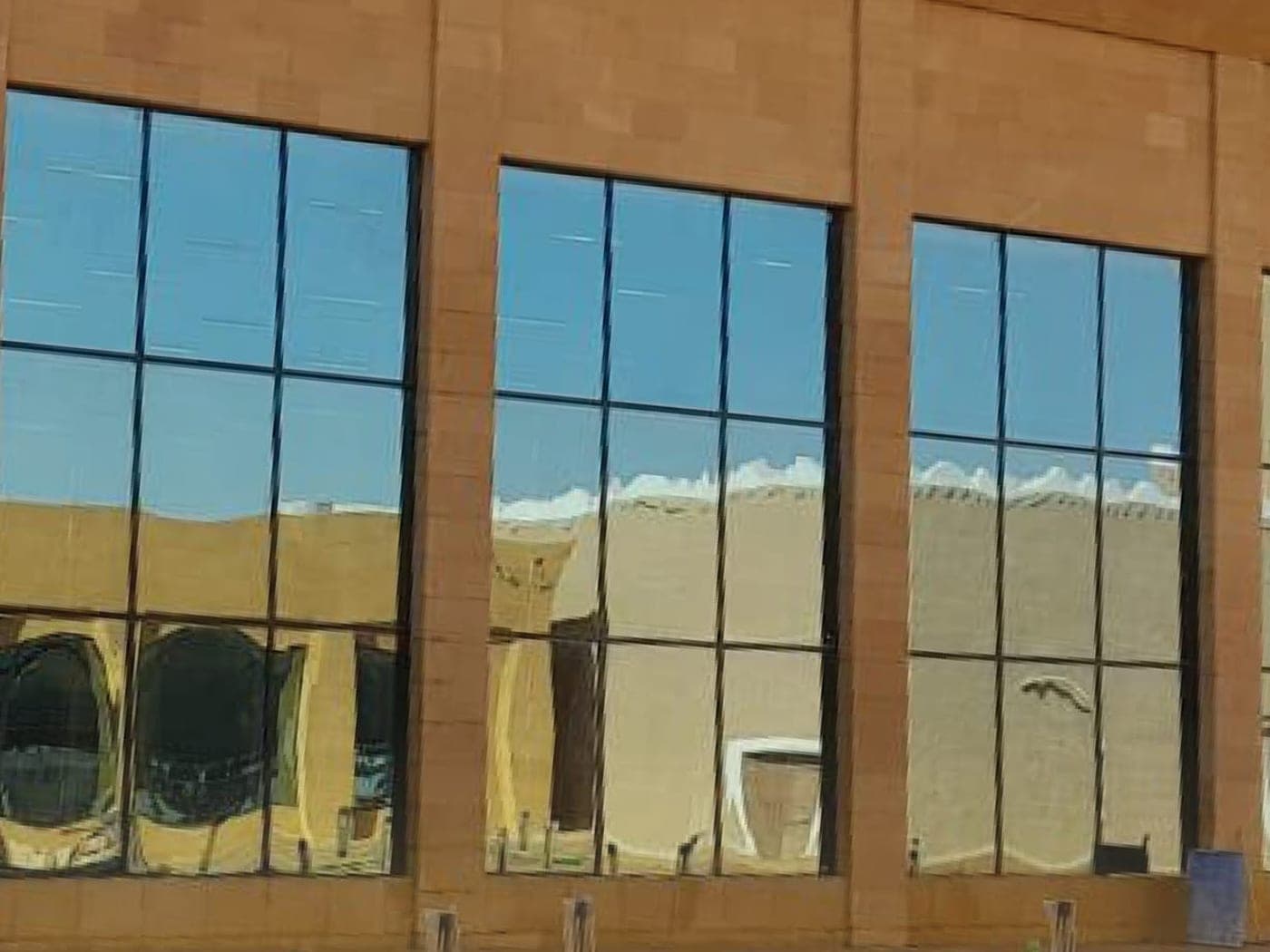
Riyadh tests a window frame harder than almost any city on earth: months of direct sun, summer air above 45°C, and fine dust that penetrates any frame that is not sealed correctly. A thermal break aluminum system is the engineering answer to that test. This guide explains what the technology actually is, what it costs in Saudi Arabia in 2026, and how to write a specification your supplier can be held to.
What a thermal break actually is
Aluminum conducts heat roughly a thousand times better than it insulates. In a plain frame the sun-heated outer face of the profile passes that heat straight to the inner face, which radiates it into the room. A thermal break severs that bridge: the profile is extruded in two parts and rejoined through a structural polyamide strip — usually 14 to 34 mm wide — fixed by knurling and injection, creating a continuous insulating barrier across the full width of the frame.
The number that proves it is the frame U-factor, Uf, in W/m²K. A plain aluminum frame measures about 5.5 to 6.5. A well-built thermal break frame falls to 2.0 to 3.5, and when wide polyamide strips are paired with argon-filled low-E double glazing the whole window reaches a Uw of roughly 1.4 to 1.8 — the level Gulf high-performance projects now write into their specifications.
Why it matters in the Saudi climate
The energy chapter of the Saudi Building Code, SBC 601, caps the U-factor and solar heat gain of windows in air-conditioned buildings. In Riyadh's climate zone a sun-exposed glazing assembly cannot comply on good glass alone — a non-thermal frame conducts so much heat that the whole assembly fails no matter how advanced the glass is. For west elevations, which absorb the harshest afternoon sun in the Kingdom, a thermal break with low-E glass is the difference between compliance and a rejected submittal.
The practical payoff is comfort and cooling cost. Frame conduction is quieter than direct solar gain, but across a villa with 30 to 60 windows it adds real load to the air-conditioning system, and on commercial facades the effect is larger still. Thermal break frames also stay close to room temperature on the inside, which prevents condensation on the frame in cooler months and in heavily cooled interiors — protecting walls, curtains and finishes.
What to specify for thermal break windows in Riyadh
Put these points in the written specification: profile wall thickness of at least 1.4 mm for residential and 1.6 to 2.0 mm for commercial facades; polyamide thermal break strips of 20 mm or more on sun-exposed elevations; double glazing of 6 mm glass plus a 12 mm argon-filled cavity plus 6 mm low-E glass; and EPDM gaskets rather than PVC, which hardens and cracks under Saudi UV.
Specify the finish too: powder coating of 60 to 80 microns minimum, ideally from a licensed line, because in Saudi Arabia the coating — not the aluminum — decides how the profile looks after five summers. And demand the section drawing and datasheet for the exact profile system. A genuine thermal break reads clearly in the cross-section as a separate polyamide zone, and the datasheet states the Uf value in writing.
How much thermal break aluminum costs in Saudi Arabia
Installed prices in Riyadh in 2026 for thermal break aluminum windows with double glazing generally run from 550 to 950 SAR per square meter for sliding windows and 700 to 1,200 SAR per square meter for casement and tilt-turn windows, depending on the profile system, break width, glass build-up and hardware brand. Large fixed panes and floor-to-ceiling facades are quoted per project, with installation, silicone and accessories either included or itemized.
A spread of two to three times between the cheapest and the most expensive quote is normal, and it is almost never the aluminum — it is the specification. The low quote usually hides a 14 mm break instead of 24 mm, unnamed hardware, thinner profile walls and basic glass. Price the written specification, not the square meter.
Common mistakes Saudi buyers make
The most common error is confusing thermally improved with thermally broken. Some systems use plastic inserts that resemble a break but do not fully separate the two aluminum faces, so heat still flows around them — insist on the cross-section drawing and the polyamide width in writing. The second is buying a thermal frame with single glazing: the frame is only half the assembly, and an uninsulated glass unit ruins the whole window's performance.
Then come the installation mistakes. Factory-made windows need exact site measurements; a manufacturer that surveys the openings and fabricates to those numbers seals properly against Riyadh's dust and heat, while a trader who guesses does not. And do not overlook hardware: the lock and hinges carry the sash for decades, and a high-performance window with cheap fittings performs worse than a basic one with good fittings.
Do thermal break windows pay for themselves?
In the Saudi climate, thermal break windows usually pay back through cooling energy. Gulf project data and manufacturer figures commonly show that thermal break frames with low-E double glazing cut window-related cooling load by 30 to 50 percent against single-glazed non-thermal windows. In a Riyadh villa that is often a few hundred riyals a month in summer, giving a payback of roughly three to five years against the price premium of the better system.
Beyond energy, there is a comfort return. Because the inner aluminum face stays near room temperature, condensation does not form on the frame in cooler months or in strongly air-conditioned interiors, and the internal surface stays comfortable to touch — a detail owners notice long after the price is forgotten.
Buying from a Saudi manufacturer: Ramz Al Badran
A thermal break window is only as good as the factory behind it. Ramz Al Badran's factory in Riyadh manufactures and installs thermally broken aluminum windows, doors and curtain wall facades for villas, offices and commercial projects across Saudi Arabia. We build from documented profile systems with genuine polyamide breaks, specified glass build-ups and hardware from known brands — and we put the section drawings, datasheets and prices in writing before you order.
Send us your opening sizes, elevations and photos and we will return a specification, a fixed price and a timeline for thermal break aluminum supply and installation in Saudi Arabia. You are welcome to visit the factory in Riyadh, inspect the profiles and cut a section to see the thermal break for yourself before you decide.