
24 September 2026•5 min read
Tilt-Turn vs Sliding Windows: Which Suits Saudi Homes?
Practical guidance from Ramz Al Badran's factory in Riyadh on aluminum windows Saudi Arabia — what to specify, what it costs and how it performs in the Saudi climate.
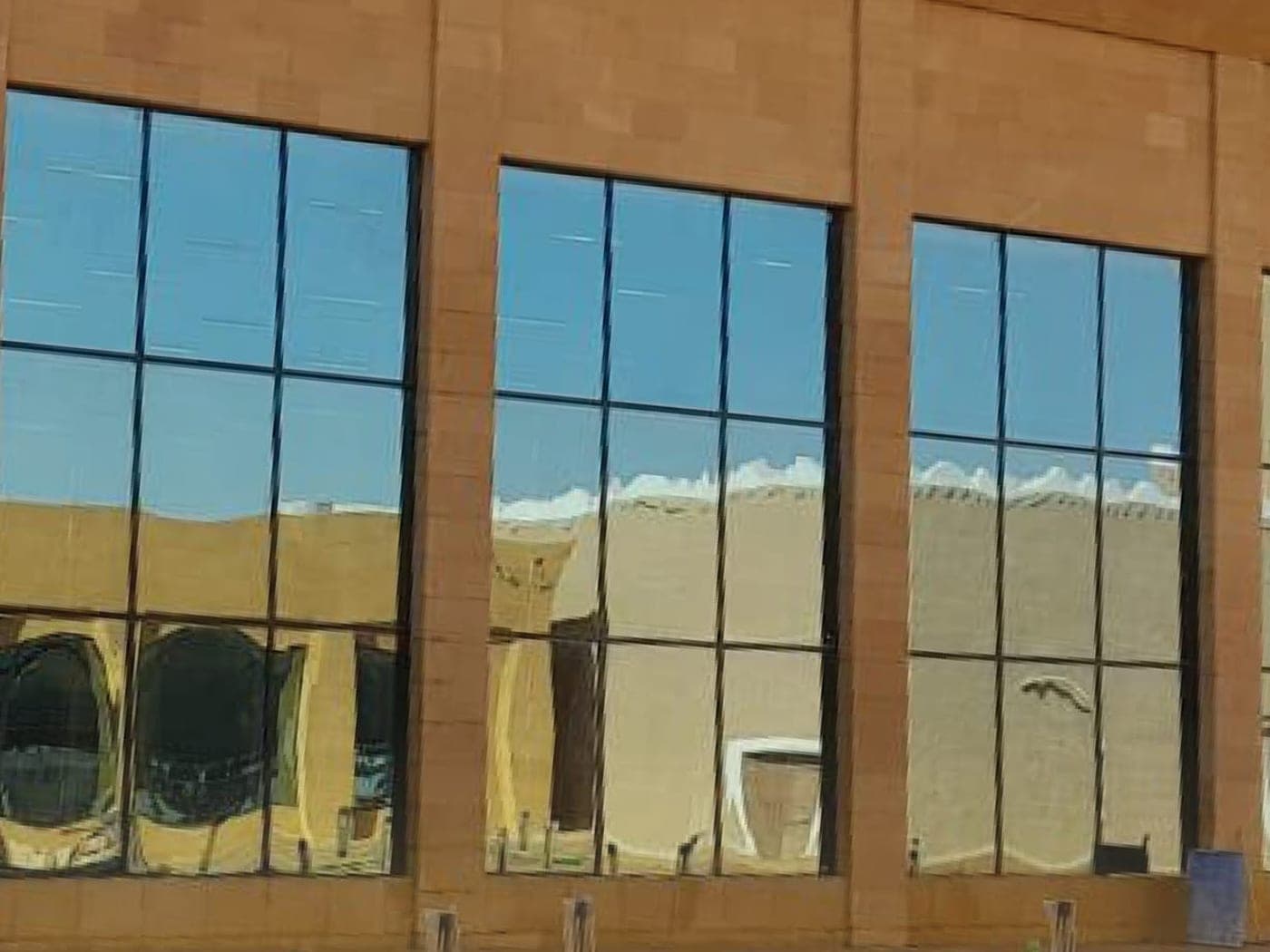
Windows in a Saudi home are not a style choice, they are a performance decision. Between a Riyadh summer that pushes past 48 degrees and a shamal that drives fine sand against every facade, how a window closes matters as much as what it is made of. The two most common opening types in Saudi villas and apartments are the European-style tilt-turn and the sliding window, and they solve different problems.
How Tilt-Turn Windows Work
A tilt-turn sash runs two motions on a single handle. In the tilt position the top of the sash leans inward a few centimetres for controlled, draught-free ventilation that keeps rain and most dust outside. Turn the handle further and the sash swings inward like a casement for full opening, easy cleaning and emergency egress.
The advantage is mechanical. Because the sash closes against a fixed frame, it presses compression gaskets all the way round — the same sealing principle as a refrigerator door. That full-perimeter compression is why tilt-turn units consistently post lower air-leakage figures than sliding units, and it is the foundation of any serious thermal break windows specification.
How Sliding Windows Work
A sliding window moves on rollers along a track, with one panel overlapping another. It needs no swing space, so it suits wide openings, balconies and rooms where furniture sits close to the glass. Operation is a light push, which many households prefer for daily use.
The trade-off sits in the seal. Sliding panels must run with a clearance to move, so they rely on brush or fin seals that sweep the track rather than a full compression gasket. In a dusty climate that clearance is exactly where sand enters and where wind-driven rain can track along the interlock unless the drainage is well designed.
Sealing, Dust and Air Leakage
Air leakage is the first number to compare. A compression-sealed tilt-turn that is correctly installed and adjusted typically shows markedly lower leakage than a sliding unit of the same size, which cuts both dust ingress and cooling loss.
Sliding systems can still perform well when specified properly: ask for double brush seals on every panel, EPDM interlock gaskets, a raised track threshold and positive drainage slots so any water reaching the track leaves before it reaches the room. On ground floors facing open desert, tilt-turn on the windward elevation is the safer default.
Thermal Performance and Cooling Load
Whatever the opening type, the frame and glass do the real work. A polyamide thermal break separates the outer and inner aluminum faces; double glazing windows KSA with a low-E coating and a warm-edge spacer cut solar gain while keeping daylight. On west and south elevations, aim for an SHGC around 0.25 to 0.35 and compare U-values for the whole unit, not just the glass.
A tilt-turn frame usually offers a deeper, uninterrupted insulating chamber around the sash, while a sliding interlock is a narrower thermal bridge. On a large glazed wall this can shift a home's cooling load by a measurable margin, so ask your window suppliers Riyadh for the calculated U-value and, where required, the SBC 601 energy-compliance sheet.
Space, Operation and Safety
Tilt-turn needs clear swing space inside the room. That is fine in a bedroom or majlis, but awkward behind a kitchen counter or a sofa. Sliding shines where space is tight and the opening is wide, and one panel can be fixed to keep cost down while still giving a generous view.
Think about who operates the window. Tilt-turn handles can be set at height for children, but the turn position is a full-height opening. Any glass within reach or low to the floor should be laminated or toughened to SBC 801, and bedrooms need an openable escape route sized for the occupants.
Cost and Value
As a Riyadh planning figure for 2026, a thermally broken, double-glazed sliding window sits in much the same band as a tilt-turn of similar size, roughly 700 to 1,200 SAR per square metre, though tilt-turn hardware is more complex and costs more at the top end. Sliding wins on cost for very wide openings; tilt-turn wins on long-term sealing and thermal performance.
Do not judge by unit price alone. Rollers, gaskets and handle gear are consumables in a dusty climate, so factor adjustment and replacement over ten years and buy from a fabricator that stocks spares for the system it sells.
Choosing Between Them — and How Ramz Al Badran Helps
The practical rule is simple: use tilt-turn for habitable rooms on hot, dusty or exposed elevations where sealing and cooling matter most, and use sliding for wide balcony doors, tight spaces and shaded or internal openings where the width of the opening drives the design.
Ramz Al Badran fabricates both systems from our own factory in Riyadh, serving aluminum windows Saudi Arabia nationwide. Because we make the profile, the thermal break, the glazing and the finish under one roof, we match the opening type to your orientation, rooms and budget, then size and document every unit to the Saudi Building Code. Send us your plans and we will return an itemised quotation with a realistic production programme.