
10 September 2026•5 min read
Thermal Break vs Standard Aluminum Profiles in Riyadh
Practical guidance from Ramz Al Badran's factory in Riyadh on thermal break aluminum — what to specify, what it costs and how it performs in the Saudi climate.
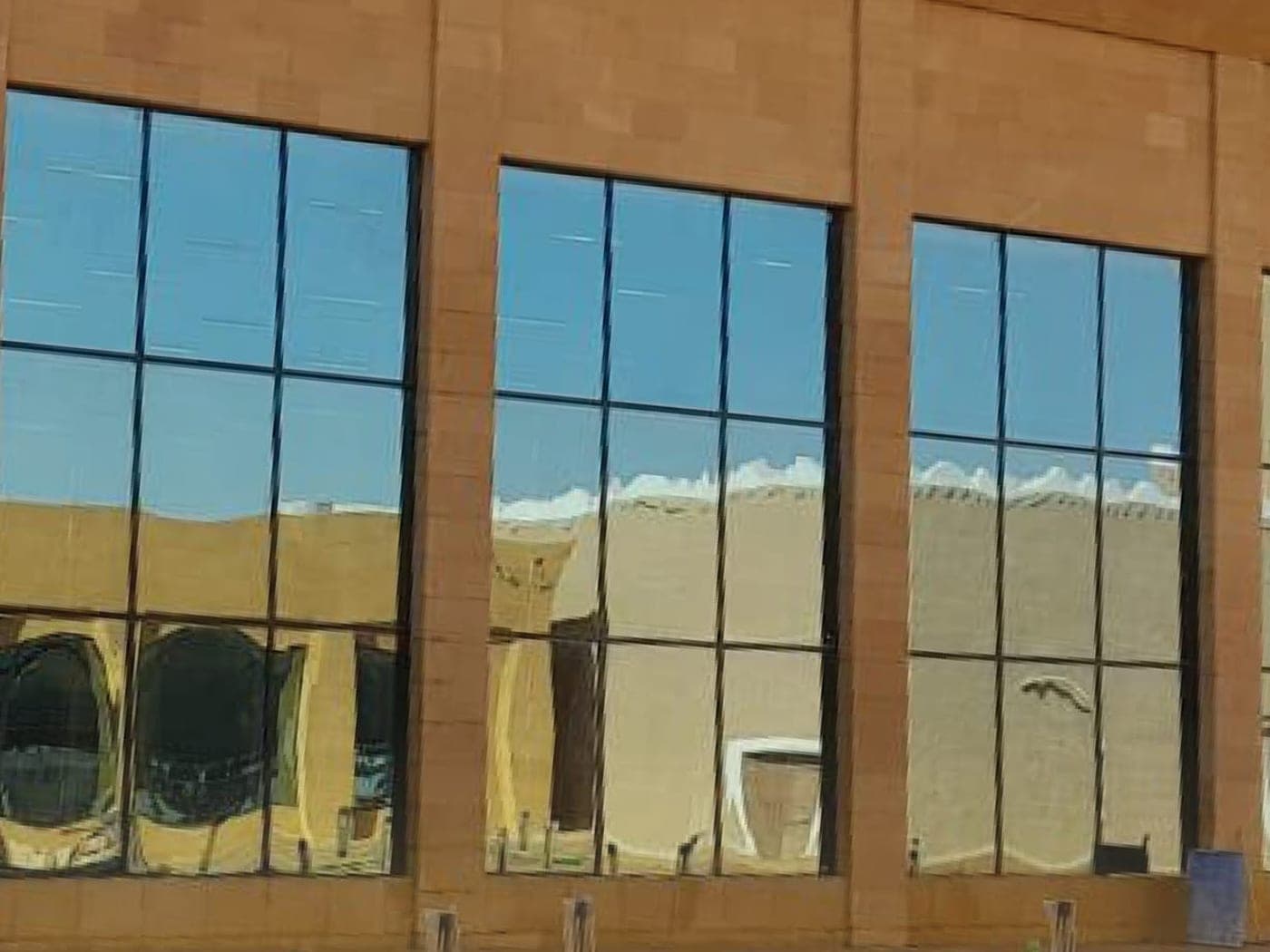
In Riyadh, the aluminum frame around a window is often the weakest link in the building envelope. Standard aluminum conducts heat about a thousand times faster than the polyamide used in a thermal break, so in summer it pulls outdoor heat straight into a conditioned room, and on winter nights it does the reverse. This guide explains what thermally broken profiles actually are, how they perform against Saudi Building Code limits, what they cost in the local market, and where the premium is worth paying.
What a thermal break actually is
A thermal break profile is two aluminum chambers joined by reinforced polyamide strips, narrow insulating bars normally 14.8 mm, 24 mm or 34 mm wide and strengthened with glass fibre. The strips physically separate the exterior face of the frame from the interior face, forcing heat to cross a low-conductivity bridge instead of traveling through solid metal. The wider the strip, the longer that path and the lower the frame U-value.
The difference is measurable. A standard aluminum frame sits around Uf 5.5 to 6.0 W/m2K. A thermally broken frame with a 24 mm strip and double glazing typically lands near Uf 2.0 to 3.0, and the complete window (Uw) around 2.8 to 3.2 W/m2K against 4.5 to 5.5 for a standard profile. That gap is the entire argument: it is the difference between a frame that fights your air conditioner and one that works with it.
Why Riyadh's climate makes it non-negotiable
Riyadh is a stress test for any window. Summer highs routinely pass 45 C, solar radiation on west and south elevations is intense, and cooling dominates the electricity bill. Every watt of heat entering through the frame must be removed by the air conditioner, a cost repeated for the life of the building and one that is invisible next to the glass.
This is where Saudi code intervenes. SBC 601, the energy-conservation chapter of the Saudi Building Code, sets maximum U-values and solar heat gain coefficients by climate zone. In Riyadh's zone those limits push specifications toward double glazing with a low-e coating, and a non-thermally-broken frame can fail the overall Uw limit even with excellent glass, because the metal undoes much of the glazing's insulation. Specifying a thermal break from the outset is the practical route to passing the thermal calculation on the first submission.
Comfort matters too. A conductive frame creates a hot band around the window and, in winter, condensation on the inner surface. Thermally broken profiles stay closer to room temperature, which means fewer cold drafts in January and no water tracking down the frame in air-conditioned rooms.
What it costs in the Saudi market
The premium is real but narrower than most buyers expect. In the Saudi market the thermal break adds roughly 20 to 35 percent to the frame cost, in Riyadh today on the order of SAR 80 to 150 per square metre of window before glazing. The complete double-glazed window typically lands around SAR 500 to 750 per square metre installed, against roughly SAR 350 to 500 for a standard-profile equivalent.
The counterweight is payback. On a west-facing villa window, a thermally broken, double-glazed unit typically cuts that opening's heat gain by 40 to 60 percent compared with a single-glazed standard frame. At Saudi electricity tariffs the difference is usually repaid within a few years, and unlike the cheaper frame the thermal break keeps paying for the whole life of the building. When we price a project, the question is never whether the thermal break costs more; it is which elevations earn it back fastest.
Reading the specification like a buyer
Not every profile sold as thermal performs the same, so buy on numbers rather than adjectives. Ask for the Uf of the frame and the Uw of the assembled window, and for the test certificate behind them. Check the polyamide strip width, where 14.8 mm is entry level and 24 and 34 mm are used where insulation matters, and whether the profile is foamed, with polyurethane injected between the strips. Confirm the strips are crimped into the profiles in the factory, not assembled with screws on site.
Glass must be specified as part of the same system. For Riyadh the practical combination is double glazing with a low-e coating and argon fill, plus a warm-edge spacer inside the sealed unit. A strong thermal break behind single clear glass is wasted money, and excellent glass in a non-broken frame underperforms its rating. Finally, ask for the SBC 601 compliance calculation in writing, because reputable suppliers in Riyadh provide it as standard documentation.
Where standard profiles still make sense
A thermal break is not the right answer for every square metre. Interior partitions, windows in covered or unconditioned areas, storefronts in shaded arcades and service zones rarely justify the premium, because there is no conditioned space behind them to protect. There, standard profiles with the same powder coating and hardware are a sensible saving.
The rule we give clients is simple: spend the thermal break where the sun and the air conditioner meet, on the external windows of living rooms, bedrooms, offices and any elevation with serious solar exposure. Save it where the space behind the window is not cooled. A budget directed at the right openings buys more comfort than the same money spread evenly across every window.
Mistakes we see on Riyadh projects
Three errors recur often enough to name. The first is mixing a premium frame with ordinary glass: clients approve a 24 mm foamed profile and then accept basic clear sealed units, and the window performs like a cheap one. The second is comparing offers on price per square metre instead of on specification, since one quote may hide a 14.8 mm strip and single glazing behind the words thermal break aluminum. The third is fitting thermally broken windows without checking how the frame meets the wall, because a well-insulated frame in a poorly sealed opening leaks the savings straight back through the perimeter.
Each of these is avoidable by putting the specification in writing before the order and requiring the U-values, strip width, glass build-up and installation scope to be stated in the same document.
Thermal break windows from Ramz Al Badran
Ramz Al Badran fabricates thermally broken aluminum windows in its factory in Riyadh, using profile systems with certified polyamide breaks and double glazing matched to the Saudi climate. Our engineers run the SBC 601 thermal calculation, the factory produces and assembles the units, and our crews deliver and install them under one contract, with U-values and test documentation issued in writing before fabrication begins, so what you approve is what gets installed.
If you are planning a villa, a compound or a commercial building in Riyadh, send us your window schedule or drawings for a specification review and a fixed quote. We will tell you honestly where the thermal break pays for itself and where it does not, which is how we built our name as one of the trusted aluminum window companies in Saudi Arabia.