
26 September 2026•5 min read
Sliding vs Hinged Aluminum Doors: A Buyer Guide
Practical guidance from Ramz Al Badran's factory in Riyadh on aluminum doors Saudi Arabia — what to specify, what it costs and how it performs in the Saudi climate.
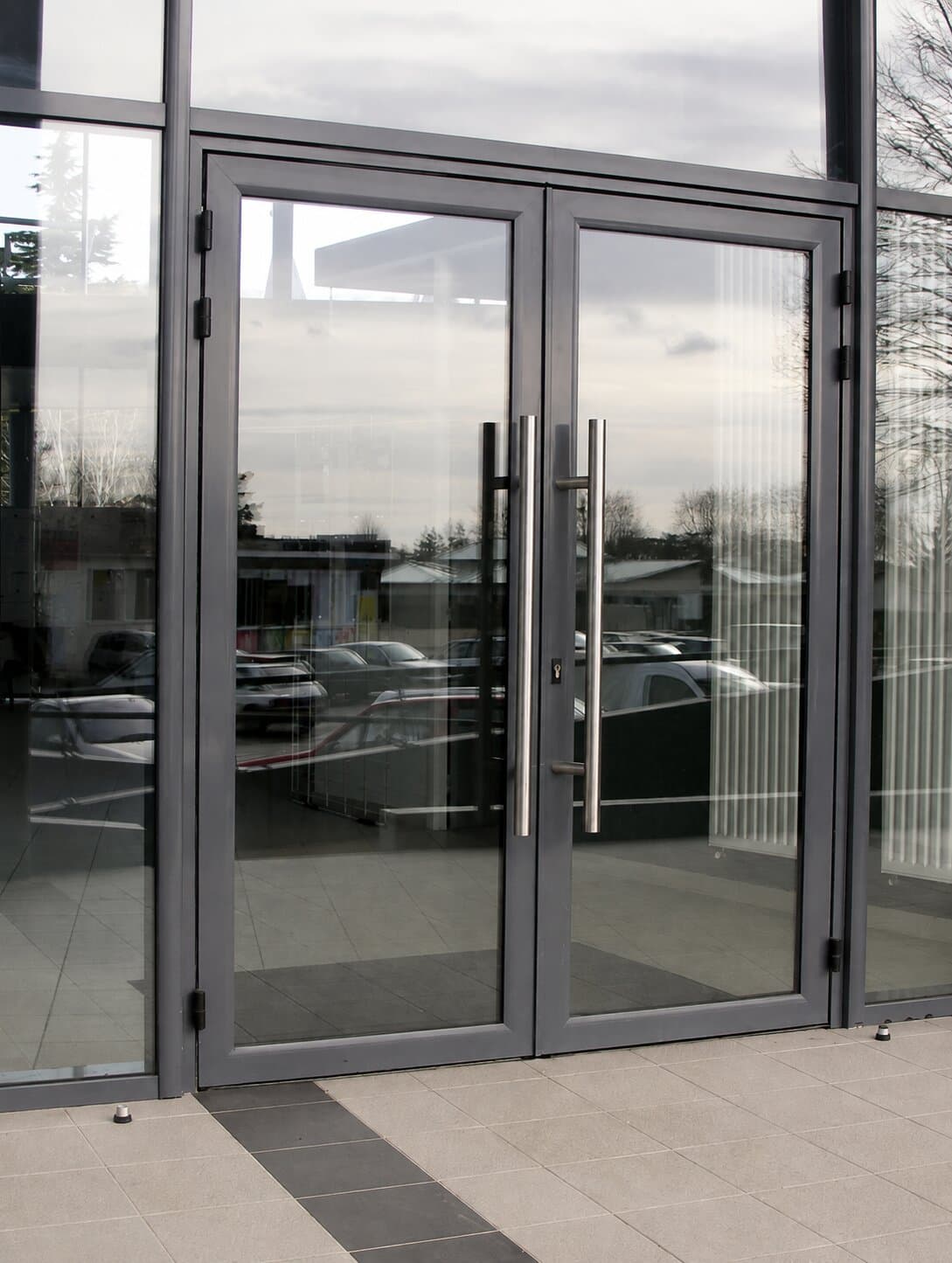
Every time someone walks through a door, they test how well it was specified. In Saudi Arabia the stakes are higher than in a milder climate: a door that seals poorly lets in dust, admits heat and keeps raising cooling bills for the life of the building. This guide compares sliding and hinged aluminum doors on the factors that actually decide value — sealing, floor space, hardware load, code compliance and realistic 2026 prices in Riyadh.
Sliding or Hinged: What Actually Changes
Sliding doors travel on top and bottom tracks, with panels that move horizontally and stack to one side. They suit wide openings — three to six metres and more with multi-track systems — and use no swing space, which is why villas, showrooms and offices rely on them for terrace and partition openings. Hinged doors rotate on hinges and close against compression gaskets, giving the tightest seal and the conventional entrance appearance most clients expect.
The practical differences surface in three places. Sliding doors seal with brush weatherstripping and interlocking stiles, and their weight rides on bottom rollers; hinged doors transfer load to hinges and a threshold. Each has a characteristic failure: sliding rollers wear and tracks collect sand, while hinges sag and gaskets harden when a heavy leaf is hung on cheap hardware.
Sealing and Dust in the Saudi Climate
Riyadh's climate attacks doors from four directions — extreme summer heat builds pressure across the leaf, dust storms deposit fine sand in tracks and thresholds, UV degrades coatings and gaskets, and thermal shock stresses glass. A sliding door with a weak bottom seal starts showing dust streaks on the floor within one season. The cure is a recessed track, a bridging threshold and brush seals on every moving edge.
Thermal performance matters most on wide openings, because a six-metre sliding door is one long uninterrupted area of frame and glass. Non-thermal profiles turn it into a heat bridge that lifts cooling load noticeably, so specify thermally broken profiles with double glazing and a low-E coating. On west-facing entrances, laminated glass adds UV control and security in a single pane.
Specifications That Matter
Four specifications decide whether a door survives a decade: profile wall thickness (1.2 to 2.0 mm for exterior doors), coating quality (powder coating to AAMA 2604-class standards resists UV fading), hardware rating, and glass build-up. For sliding doors, ask for the roller load rating in kilograms and whether the track can be recessed into the floor — recessed tracks clean more easily and allow a flush, wheelchair-friendly threshold.
For hinged doors, count the hinges — heavy leaves need three or four, not two — and insist on multi-point locking so the gasket compresses evenly around the whole perimeter. Demand section drawings and a hardware schedule with the quotation. If a supplier cannot name the profile system and hardware brand in writing, the door will be assembled from whatever is cheapest that week.
Saudi Building Code and Safety Glazing
The Saudi Building Code governs doors in two places. SBC 601 (energy conservation) sets maximum U-factor and SHGC values for doors in conditioned buildings, so glazed doors must meet the same requirements as windows. SBC 801 requires safety glazing wherever glass is exposed to human impact — tempered or laminated glass for door panels and sidelights, with laminated glass the common choice for entrance doors.
For commercial and exit doors, SBC 801 egress rules apply: doors on exit paths must swing in the direction of travel, meet clear-width requirements and use panic hardware where occupant load demands it. Ask for datasheets, test certificates and stamped calculations. A fabricator with in-house engineering supplies these as standard; a trader struggles to produce them.
What Aluminum Doors Cost in Saudi Arabia
Installed prices in Riyadh in 2026: a standard single hinged door with thermal break and double glazing runs about 1,200 to 2,500 SAR; a double entrance door 2,500 to 5,000 SAR; and sliding systems roughly 900 to 1,600 SAR per square metre depending on span, profile and glass. Adding an automatic operator to a sliding entrance adds about 8,000 to 15,000 SAR including sensors and safety beams.
The gap between quotations is almost never about the aluminum itself — it is profile wall thickness, thermal-break quality, hardware brand, glass specification and installation. The cheapest quote typically pairs thin profiles with non-thermal frames and unnamed hardware; within five years the door sags, fades and leaks dust. Price the specification, not the door.
Choosing an Aluminum Door Manufacturer in Riyadh
Buy from a manufacturer, not a reseller. Visit the factory, confirm whether coating is done in-house, inspect completed doors from recent Riyadh projects and request an itemized quotation naming the profile system, glass build-up and hardware brands. A maker that measures openings on site and issues its own fabrication drawings delivers doors that fit; a trader only forwards orders.
Get the warranty structure in writing: what is covered — glass, coating, gaskets, hardware, labour — for how long, and who responds when a door needs adjustment. Doors settle after the first summer, so tracks and hinges need tuning. A local manufacturer with its own installation team is worth more than a longer warranty from a distant supplier.
Engineered in Riyadh with Ramz Al Badran
Ramz Al Badran designs, fabricates and installs sliding and hinged aluminum doors for villas, offices and commercial entrances from our factory in Riyadh, specified for the Saudi climate from the first drawing. Because we fabricate in-house rather than trade imported systems, your itemized quotation is built from the actual profiles, hardware and glass, with thermal-break and glazing data for the exact specification.
Send us your opening sizes, elevations and photos, and we will return a specification, a fixed price and a timeline for aluminum door supply and installation in Saudi Arabia. You are welcome to visit the factory to inspect profiles, hardware samples and the coating line — and to see sliding and hinged doors in production — before you decide.