
23 September 2026•5 min read
How Louvers Reduce Solar Heat Gain in Riyadh Buildings
Practical guidance from Ramz Al Badran's factory in Riyadh on aluminum louvers Saudi Arabia — what to specify, what it costs and how it performs in the Saudi climate.
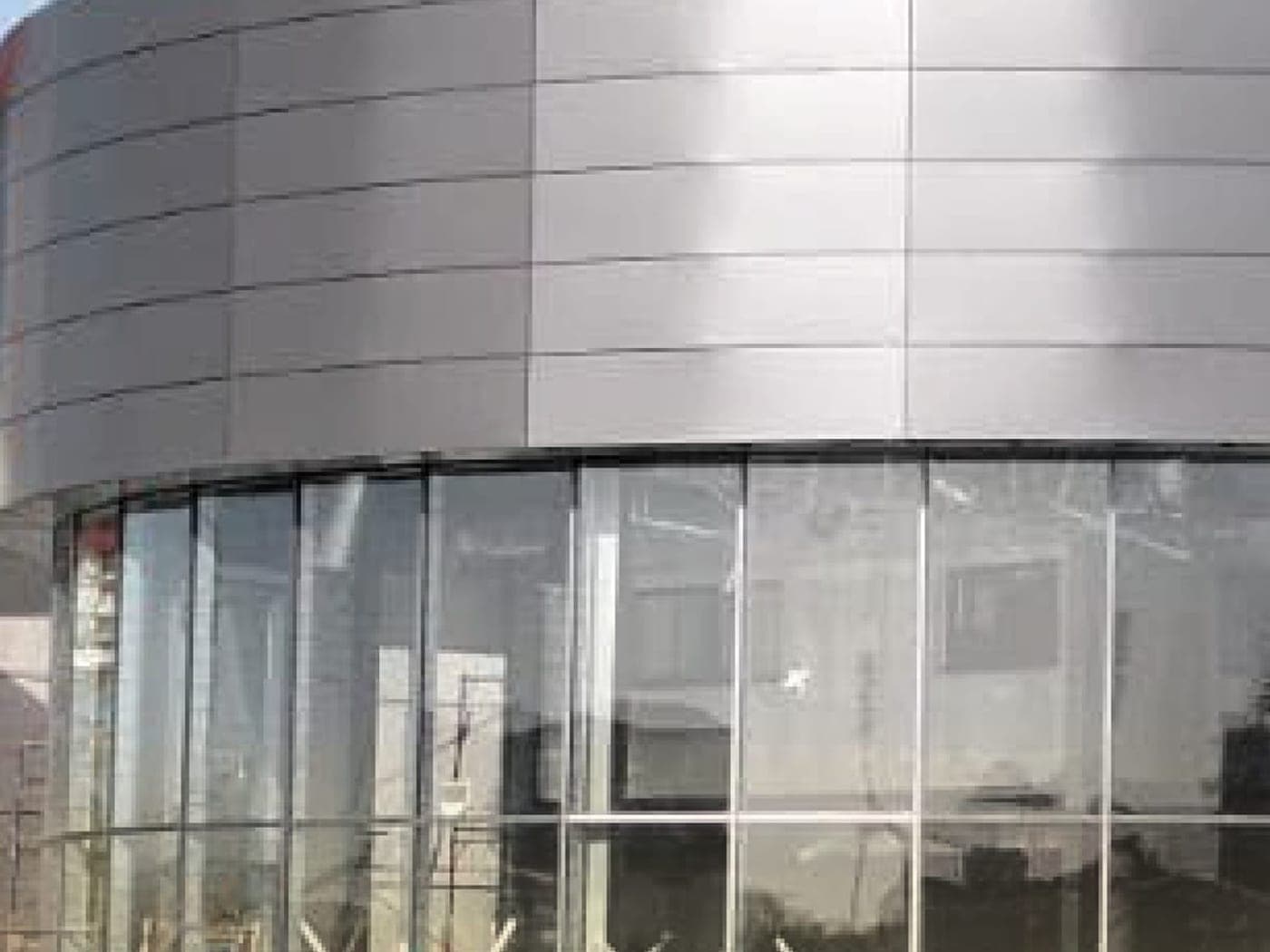
Saudi Arabia's cooling load is dominated by one thing above all: solar heat gain through the building envelope. In Riyadh, where summer temperatures pass 45°C and the sun beats down on west and south elevations for much of the year, a large share of the air-conditioning bill is simply the cost of sunlight entering the building. Aluminum louvers Saudi Arabia — rows of angled blades set in front of or inside a facade opening — interrupt that heat at the outside face, where it is cheapest to stop. This guide explains how louvers cut solar heat gain, how to specify facade louvers in Riyadh and what they cost.
How louvers block solar heat
A louver's shading performance is measured by its shading coefficient (SC) or solar heat gain coefficient (SHGC) — the fraction of incident solar radiation that passes through the assembled screen. A well-designed deep-blade louver blocks 70-90% of direct solar radiation while still letting air move. The geometry does the work: blade angle, depth and spacing are engineered so that at the sun angles typical of a Riyadh afternoon, direct radiation strikes the blade face and is reflected or convected away instead of passing through the opening.
Two mechanisms matter. First, the blades cast a shadow over the opening behind them, keeping direct sun off the glazing or wall. Second, the blades themselves heat up — but because they sit outside the building's insulation line, that heat is released to the outside air. This is why exterior shading works far better than blinds or curtains inside, which trap heat within the conditioned space.
Riyadh's sun angles and the building code
The solar load in Riyadh is not uniform. East elevations take morning sun, west elevations take the intense late-afternoon sun, and south elevations receive high-angle sun for most of the year. West-facing glazing is the hardest to cool, which is why facade louvers in Riyadh are most often specified on west and south elevations — frequently as full-height screens in front of a curtain wall. Horizontal blades suit the high-angle south sun; vertical blades or a deeper horizontal pitch suit the low-angle western sun.
The Saudi Building Code's energy-efficiency requirements (SBC 601) push new buildings toward a lower envelope solar gain, assessed through overall thermal transfer value (OTTV) calculations. Exterior shading devices reduce the solar load before it reaches the glazing, which improves OTTV directly — often more cheaply than upgrading the glass itself. For retrofit projects, adding a louver screen to an existing west facade is one of the most cost-effective energy upgrades available.
Solar shading louvers vs glazing upgrades
Louvers and glass should be designed as one system. A louver screen that blocks 80% of direct sun in front of a standard double-glazed unit outperforms expensive high-performance solar glass on its own — and it preserves more daylight, so you can specify a lighter tint and keep better views with lower lighting loads.
For plant rooms and service openings, louvers also serve ventilation, but for shading the key figure is the solar transmittance of the assembled screen. Fixed louvers with deep blades and a steep pitch deliver the highest blockage; adjustable blades add the ability to close fully when the winter sun is low or during a dust storm. Perforated and louvered screens over curtain-wall areas are a signature of Saudi commercial facades for exactly this reason.
Specifying facade louvers in Riyadh
Start with blade geometry and free area, because the two trade off: a steeper pitch blocks more sun but restricts airflow. For pure solar shading louvers, blade depths of 100-200 mm at 30-45 degrees are typical, and solar performance should be backed by test data — ask the manufacturer for the shading coefficient of the assembled screen, not just the blade. Confirm the alloy, the profile wall thickness and the bracket design against the local wind load; a screen on a tall exposed facade sees far greater uplift than one in a protected courtyard.
The finish matters as much as the geometry. Light, reflective powder-coat or PVDF colors absorb less heat, stay cooler than dark finishes and reflect more solar radiation. Specify PVDF (70/30) for high-exposure facades and check that drainage details let sand and rain pass without staining the wall below the screen — a real risk in Riyadh's dust-laden environment.
Ventilation louver suppliers: what to ask
Not every louver is a shading screen, and not every supplier fabricates what it sells. When comparing ventilation louver suppliers in Riyadh, ask for tested performance data for the exact profile: shading coefficient, free area, rain defence classification and wind-load rating. Confirm the blade and frame finishes and the warranty against fading and chalking — a louver screen is a 20-year component, so the coating is a long-term decision, not a cosmetic one.
Ask how the screen is fixed to the structure and how drainage is handled, and review the installation sequence so scaffolding and access are planned in advance. Above all, buy from a manufacturer rather than an importer or middleman: a factory that fabricates blades, frames and brackets in one place controls tolerances, finish consistency and delivery timing — and can tune profiles to your sun angles instead of selling an off-the-shelf product.
What aluminum louvers cost in Saudi Arabia in 2026
Louvers in the Saudi market are quoted per square meter of screen, and the price depends on blade depth, finish and mounting. As a 2026 guide for Riyadh: fixed solar shading louvers with 100-150 mm blades and a powder-coat finish typically run 180-400 SAR per square meter supplied, with PVDF finishes and deeper storm-rated blades at the higher end. Full-height screens over curtain walls add sub-frame, bracketry and installation, which can bring an installed project to 350-650 SAR per square meter depending on height and wind exposure.
Compare that with the alternative: upgrading standard double glazing to high-performance solar glass across a large west facade often costs more per square meter than adding a louver screen — and the louvers also cut glare and give the facade its architectural identity.
Fabricated and installed by Ramz Al Badran in Riyadh
Ramz Al Badran manufactures aluminum louvers from its factory in Riyadh, engineered for the Saudi sun: deep blade profiles with tested shading performance, light-reflective PVDF and powder-coat finishes, and sub-frames and brackets sized for the wind loads of the capital. Our engineers match the blade pitch and orientation to your elevation, fabricate every component in-house and install across Saudi Arabia. Send us your facade drawings for a shading analysis and a fixed price.