
6 August 2026•5 min read
Fixed vs Adjustable Aluminum Louvers for Saudi Facades
Practical guidance from Ramz Al Badran's factory in Riyadh on aluminum louvers Saudi Arabia — what to specify, what it costs and how it performs in the Saudi climate.
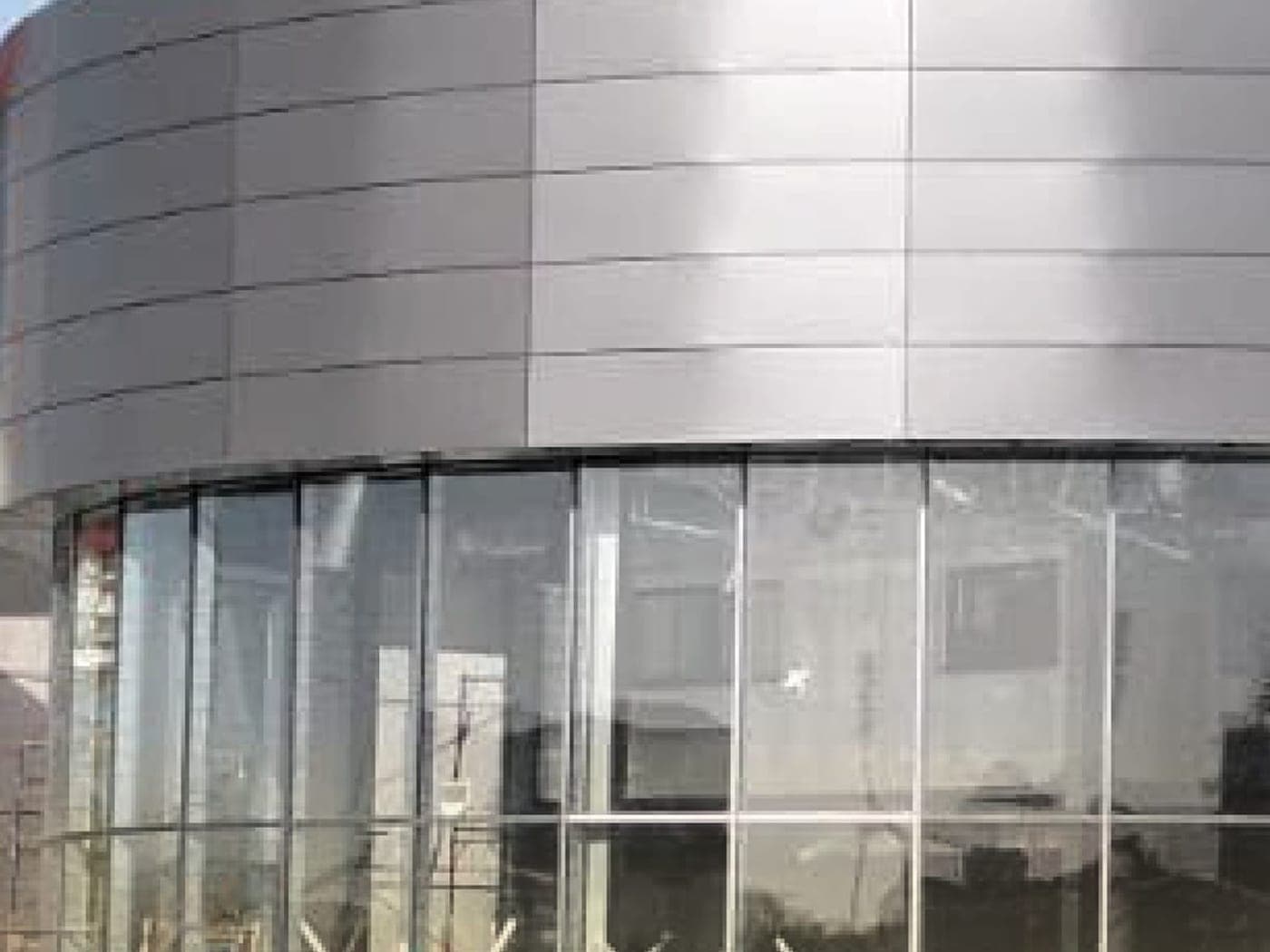
Louvers are rows of angled blades set into a facade opening that let air move while blocking sun, rain and sight lines. In Saudi Arabia they appear on nearly every commercial building — plant rooms, generator rooms, stairwells, car park facades and rooftop screens — and the choice between fixed and adjustable blades shapes both the budget and the building's energy performance for decades.
Fixed louvers: the workhorse
A fixed louver is a set of blades locked at a set angle, usually between 0° and 45° from horizontal. The blade pitch, depth and spacing are engineered together for a target free area — the percentage of the opening that air can actually pass through. Typical fixed louvers deliver 40–60% free area depending on weatherproofing requirements, with common blade depths of 75, 100 and 150 mm, and they are rated for airflow and rain defense under standards such as AMCA.
Fixed louvers suit ventilation openings that never need to close: plant rooms, generator intakes, transformer rooms and permanent stairwell ventilation. With no moving parts there is nothing to maintain, no actuator to fail and no control wiring — which is why most Saudi projects run on fixed louvers.
Adjustable louvers: when control pays
Adjustable louvers pivot on a linked blade system driven by a manual handle, a lever arm or a motorized actuator with a control panel. Blades rotate from fully open to fully closed, turning a vent into a solid screen — or a shaded semi-open slot — on demand. Motorized versions can connect to the building management system and close automatically on rain, dust storms or fire alarm.
They cost more and need power, cabling and periodic maintenance, so they pay off where control has real value: lobby and atrium vents closed during dust storms, mechanical floors where dampers are impractical, or west-facing screens that track the sun. For simple plant-room ventilation, the extra cost rarely earns itself back.
Saudi climate: sun, dust and the building code
Riyadh summers push outdoor temperatures past 45°C, and the west and south elevations carry the heaviest solar load. A louver's shading performance matters as much as its airflow: deep blades with a steep pitch block direct sun while still venting heat, which lowers the cooling load on glazed openings and plant spaces. Louvers are also the first line of defense against the sand-laden winds of spring and summer — fine dust finds its way through any gap, so blade overlap and gasketed frames are worth specifying.
The Saudi Building Code sets ventilation requirements for mechanical spaces and car parks, and the energy-efficiency requirements push facades toward lower solar gain — both angles involve the louver's tested free area and shading coefficient. Check the required free area against the equipment's airflow demand: an undersized louver starves the plant, and an oversized one lets in the weather. Most consultants specify AMCA-tested performance data so airflow and rain defense are proven, not guessed.
What louvers cost in Saudi Arabia
Louver pricing in the Saudi market is driven by blade depth, finish and whether the assembly is fixed or adjustable. Fixed aluminum louvers typically range from about 150 to 350 SAR per square meter depending on profile depth and powder-coat or PVDF finish, with deeper storm-resistant blades and heavier extrusions at the higher end. Adjustable systems add pivot hardware, linkage and — if motorized — actuators, control panels and cabling, which can push a project to 500–900 SAR per square meter or more before installation and wiring.
Get the free area right before comparing prices: a cheap louver with 35% free area may force a larger wall opening than an engineered one with 55%. Compare quotes on tested performance per square meter of opening, not per square meter of blade — and remember that installation, sub-frames and bird mesh are usually quoted separately.
What to ask your louver supplier
Ask for AMCA or equivalent test data for the exact profile being supplied, and confirm the free area at the blade angle you need. Specify the finish: PVDF (70/30) for coastal or high-exposure facades, powder coat for most inland projects, and check the warranty against fading and chalking under UV. Confirm blade gauge and depth — thin blades flutter and rattle in wind, while heavier extrusions stay quiet in a Riyadh storm.
For adjustable units, ask about actuator life, manual override during a power cut, and access for maintenance — blades and linkages that cannot be reached are simply never serviced. Finally, confirm installation details: bird and insect mesh, sub-frame drainage and structural anchoring are what keep a louver looking and performing right after years of sun and dust.
Fixed or adjustable — buy from a factory
The right answer depends on the opening's job, not on fashion: if the vent never needs to close, a well-engineered fixed louver is the honest, lower-cost choice; if the facade must respond to weather or fire, adjustable blades earn their price. Either way, buy from a fabricator that controls extrusion, fabrication and finish under one roof and can show tested performance data rather than a brochure.
Ramz Al Badran manufactures fixed and motorized aluminum louvers from its factory in Riyadh — engineered blade profiles, PVDF and powder-coat finishes, and tested free-area performance for plant rooms, car parks and facades across the Kingdom, supplied and installed by our own teams.