
13 September 2026•5 min read
Curtain Wall vs Window Wall: Choosing a Facade System
Practical guidance from Ramz Al Badran's factory in Riyadh on curtain wall contractors Saudi Arabia — what to specify, what it costs and how it performs in the Saudi climate.
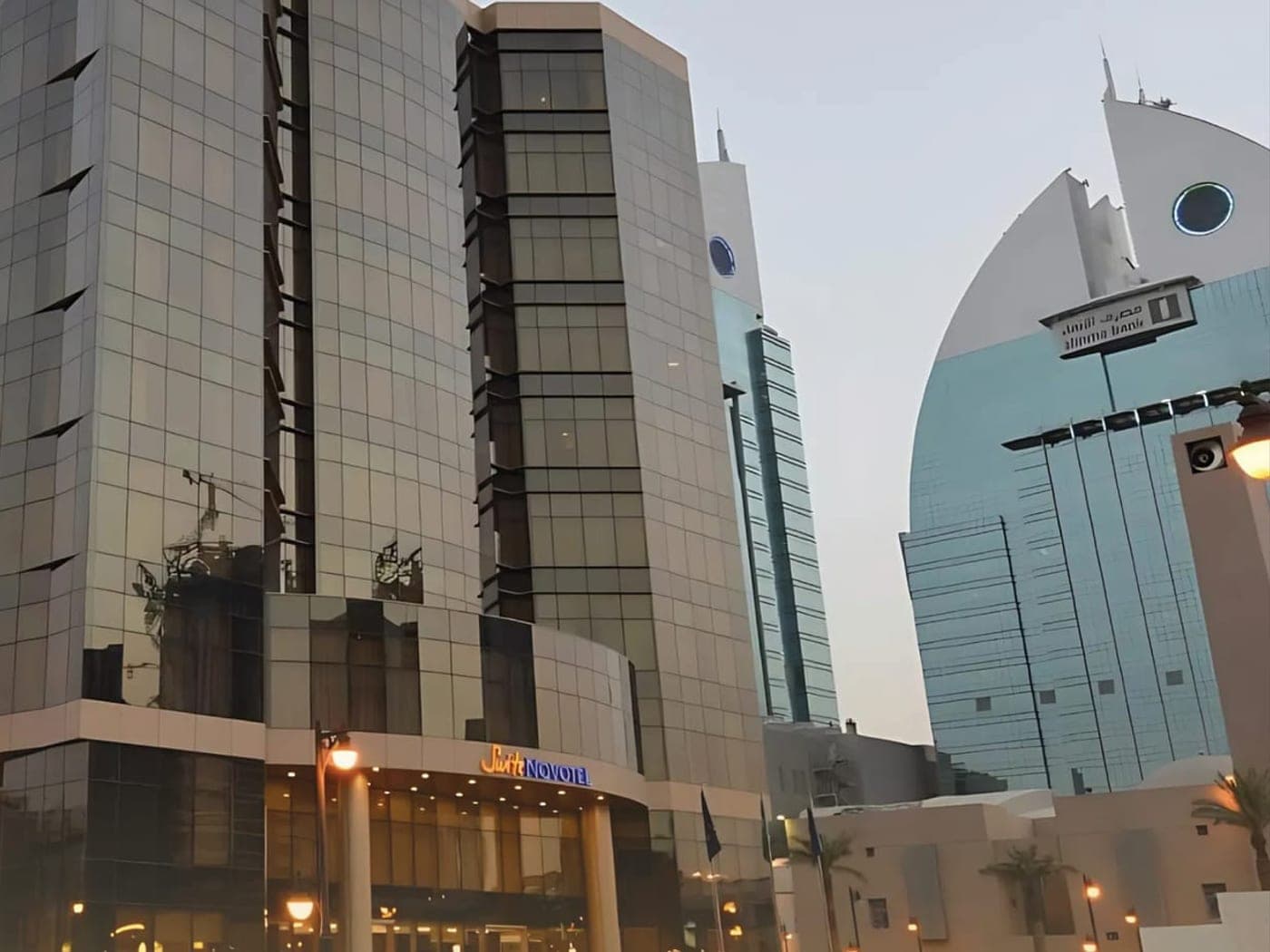
Curtain Wall vs Window Wall: The Core Difference
A curtain wall and a window wall both give a building a glass face, but they meet the structure differently, and that single detail drives cost, appearance and long-term performance. A curtain wall is a continuous skin hung in front of the floor slabs and anchored at the slab edges, so the glazing runs from floor to floor without a break. A window wall sits inside the slab-to-slab opening: every floor gets its own complete frame with a head and a sill, and the slab edge reads on the elevation as a horizontal shadow line.
In plain terms, a window wall is a stack of large, self-contained windows, while a curtain wall is one engineered facade. That is why height, wind load and architectural intent — not price alone — usually decide which system a project should use.
Stick, Unitized and Window Wall: How Each Is Built
Curtain walls follow one of two build methods. A stick system assembles mullions, transoms and glass on site from factory-cut lengths — flexible for complex geometry, but slower and dependent on weather and scaffolding. A unitized system ships floor-height panels from the factory that are craned into place and stacked, which compresses the site programme and moves quality control indoors. Unitized almost always costs more per square metre, but on tall towers the saved site time often repays the premium.
A window wall is closer to premium window installation. Each unit is set, levelled and sealed into its opening, with no continuous mullion splices and no engineered slab-edge brackets — so fabrication is lighter, transport is simpler and a local crew can install it quickly. The trade-off is a visible frame line at every floor and less freedom for curved or sloped geometry.
How the System Changes Cost
On a low-rise building in Riyadh, a double-glazed window wall with a thermal-break profile typically falls in the SAR 700–1,000 per square metre range. A stick curtain wall runs about SAR 1,000–1,400, and a unitized curtain wall starts around SAR 1,300 and climbs with glass specification, coating and complexity. These are planning figures for budgeting, not quotations — the glass package alone can move the number significantly.
Compare quotes on the same specification sheet. If one factory prices per square metre and another per unit, or one bundles silicone, delivery and installation while another lists them separately, the totals are not comparable. Ask for an itemised breakdown and be sceptical of prices far below the market: cheap aluminum in Saudi Arabia usually means thinner profiles, thinner coating and hardware that fails early.
Remember that price per square metre is only part of the decision. Continuous curtain-wall glazing changes daylight, views and usable area near the slab edge, which can affect the whole building design and its value.
Performance in the Saudi Climate
The Saudi climate is the real specifier. Riyadh summers pass 45°C, west and south elevations take intense solar gain, and dust seasons attack every gasket. For most projects the workable package is double glazing — commonly 6 mm glass / 12 mm air space / 6 mm glass — with a low-E coating and, on hot elevations, a tinted or reflective outer pane to lower the solar heat gain coefficient. The framing should be a thermal-break profile; a 24–34 mm polyamide break is the normal range for facade work.
A curtain wall has an advantage at the slab line, where continuous thermal-break framing and pressure-equalised seals avoid the concentrated thermal bridges that window walls create at every floor. A window wall counters with less total glass and therefore less solar gain, plus simpler gaskets that are easier to replace after dust season. Coastal projects in Jeddah and Dammam add salt and humidity, so ask for marine-grade powder coating or anodising with proper pre-treatment.
Code Compliance and Testing
The Saudi Building Code (SBC 601) treats the building envelope as a compliance item, so U-value and solar heat gain coefficient are not optional extras. A facade contractor who cannot produce thermal calculations and product documentation will stop your project at the consultant's desk or the municipality. Ask for the calculations in writing, tied to the specific glass and profile build-up you are buying.
Good fabrication is verifiable. Profiles should come from a licensed system with documented thermal-break width, glazing should carry certification, and finished assemblies should be water-tightness tested. On larger projects, a mock-up tested for air, water and structural performance before bulk fabrication catches problems while they are still cheap to fix.
Matching the System to the Building
As a rule of thumb, window walls suit low- and mid-rise buildings — residential blocks, offices up to roughly 10–15 floors, hotels and clinics — where a slab-edge shadow line is acceptable and the budget does not justify a full curtain wall. Curtain walls come into their own on taller towers, on buildings with complex or curved geometry, and wherever the design calls for large uninterrupted glazing and a seamless skin.
Wind load settles the argument as buildings rise: every metre of height increases the pressure the facade must transfer to the structure, which is exactly the engineering a curtain wall is designed for. For villas, showrooms and small commercial buildings in Riyadh, a well-specified window wall is usually the pragmatic choice.
What to Ask a Curtain Wall Contractor
When comparing curtain wall contractors in Saudi Arabia, put every quotation on one specification sheet: profile system and thermal-break width, glazing type and coating, anchor and framing design, silicone brand, test regime and warranty. Ask who performs the SBC 601 thermal calculations, whether the price covers survey, fabrication, delivery, installation and cleaning, and how long the warranty runs.
Then visit the factory. A contractor that fabricates its own profiles can show you the CNC floor, the coating line and test records; a broker cannot. Always insist that the profile system name appears in writing on the quotation and the invoice — equivalent profile is not a specification.
Choosing a Facade System with Ramz Al Badran
Ramz Al Badran operates an aluminum factory in Riyadh that fabricates and installs both curtain walls and window walls from licensed systems, with CNC fabrication, powder coating and SBC 601 thermal calculations under one roof. Because we make and fit the facade ourselves, we can tell you honestly which system suits your building — and the cost comparison comes from our own production floor, not from a brochure.
If you are comparing facade companies in Riyadh, or looking for glass facade contractors for an upcoming project, send us your drawings and window schedule. We will review the specification, recommend the right system and return a fixed, itemised quote — and you are welcome to visit the factory and inspect the test records of completed projects before you decide.