
2 September 2026•5 min read
Curtain Wall Cost per Square Meter in Saudi Arabia
Practical guidance from Ramz Al Badran's factory in Riyadh on curtain wall contractors Saudi Arabia — what to specify, what it costs and how it performs in the Saudi climate.
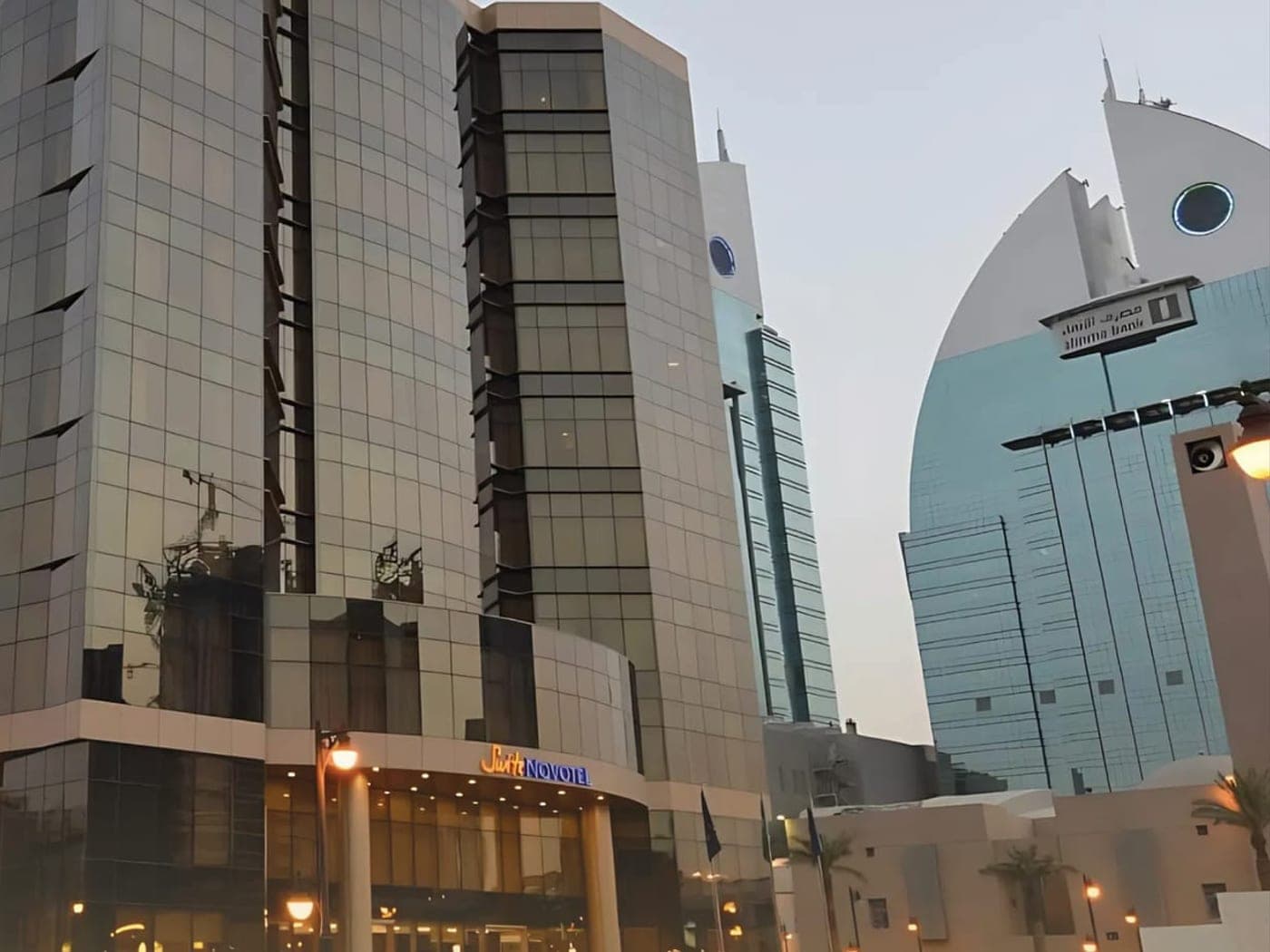
What the square-meter price really covers
Curtain wall cost per square meter in Saudi Arabia is the first question every developer asks, and the hardest to answer with a single number. A curtain wall is not one product but a system — aluminum framing, glass, thermal breaks, anchors, gaskets and installation — and each component moves the price in a different direction. This guide explains what the square-meter rate actually buys, where bids from curtain wall contractors in Saudi Arabia diverge, and how to compare them on an equal footing.
In the Saudi climate, the cheapest facade is rarely the cheapest building. Solar gain, dust, thermal movement and sandstorms punish poor detailing within the first few years, so the real question is not just what the facade costs per square meter but what it costs to own, cool and maintain over the building's life. That is why specification discipline matters more than the headline rate.
Stick-built or unitized: the system decides the price
The single biggest driver of the square-meter price is the system type. Stick-built curtain walls are assembled profile by profile on site, which suits mid-rise buildings and irregular geometries; the materials cost less but the labor content is higher. Unitized systems are fabricated and glazed in the factory as complete panels and craned into place, giving faster site programs and tighter quality control — at a higher price per square meter.
For high-rise towers in Riyadh, unitized panels are usually the only practical choice because of wind-load demands and installation speed at height. For a three-to-five-story commercial building, a well-executed stick system delivers the same appearance for significantly less. A competent facade company in Riyadh recommends based on the building height and program, not on which system carries the better margin.
Glazing is half the facade budget
Glass typically accounts for 40 to 50 percent of the total curtain wall cost per square meter. The specification that moves the price most is the insulating glass unit itself: double glazing with a low-emissivity coating is the baseline for any serious Saudi project, while triple glazing, laminated inner panes, frit patterns and oversized panels each add a measurable premium.
In the Saudi climate, solar control is the performance that matters. A high-performance solar-control coating on the outer pane cuts cooling load and glare while keeping daylight, and it pays for itself through smaller chillers and lower operating bills. The glass spec should be set by a facade engineer who models the building's orientation — the west elevation in Jeddah and the north elevation in Riyadh need different glass, and paying for one coating everywhere is waste.
Saudi climate and code requirements
Saudi Arabia's climate is one of the most demanding environments for facades anywhere: summer surface temperatures on dark glass can exceed 70°C, diurnal thermal movement is large, and dust and humidity attack gaskets and coatings. The Saudi Building Code, alongside international standards such as AAMA and CWCT, drives the testing regime — air infiltration, water penetration, structural wind load and thermal performance must be demonstrated by test, not assumed.
Testing adds a real but necessary line to the budget. A curtain wall contractor in Saudi Arabia should provide a performance test report for the exact system and glazing combination proposed, not a generic certificate for a similar product. On large projects, budget for a mock-up: the mock-up is where curtain wall installation problems are found before they become building problems.
Realistic price ranges in 2026
As a working reference in late 2026, aluminum curtain walls in Saudi Arabia typically range from 850 to 1,600 SAR per square meter for stick systems with double glazing, while unitized and structural glazing systems run from 1,400 to 2,500 SAR per square meter depending on glass specification, coating type and complexity. Premium specifications — triple glazing, large custom panels, complex geometry — push prices higher; nothing compliant exists below these ranges.
Treat these figures as a planning tool, not a price list. The final number depends on elevation area, floor height, orientation, glass sizes, access conditions and the contractor's scope. What matters is that every glass facade contractor is quoted against the same specification and scope — otherwise the comparison compares nothing.
Where bids diverge: hidden costs
Differences between competitive bids usually hide in four places: aluminum profile wall thickness and alloy, coating thickness and warranty, gasket material, and the glass supplier. A quote based on thin profiles with a basic polyester powder coat can undercut a serious bid by 15 to 20 percent while delivering a facade that fades, corrodes or leaks within years.
Anchorage and waterproofing details are another divergence point. The interface between the curtain wall and the concrete slab — flashings, sealants, fire stops — is where leaks and thermal bridges occur, and bidders who leave these details vague on paper resolve them expensively on site. Ask each bidder for a list of inclusions and provisional items, and put the testing regime, warranties and the exact glass and coating specification into the contract.
Buy from a factory, not a middleman
The most reliable way to control both price and quality is to deal directly with a manufacturer that fabricates, tests and installs with its own teams. A factory quotes from real material costs, owns its quality control process, and stands behind the product because its name is on the building. When curtain wall installation is done by the same company that engineered and fabricated the system, responsibility for performance has nowhere to hide.
Ramz Al Badran manufactures curtain walls and structural glazing facades at its aluminum factory in Riyadh and installs them with in-house crews across Saudi Arabia. Our engineers prepare shop drawings, model the thermal and wind performance, and supervise installation so the facade you approve on paper is the facade that goes up. Send us your drawings and elevation area for a square-meter price, test program and delivery schedule.