
19 September 2026•5 min read
Choosing Fire Resistant Doors for Saudi Commercial Projects
Practical guidance from Ramz Al Badran's factory in Riyadh on fire rated aluminum doors Saudi Arabia — what to specify, what it costs and how it performs in the Saudi climate.
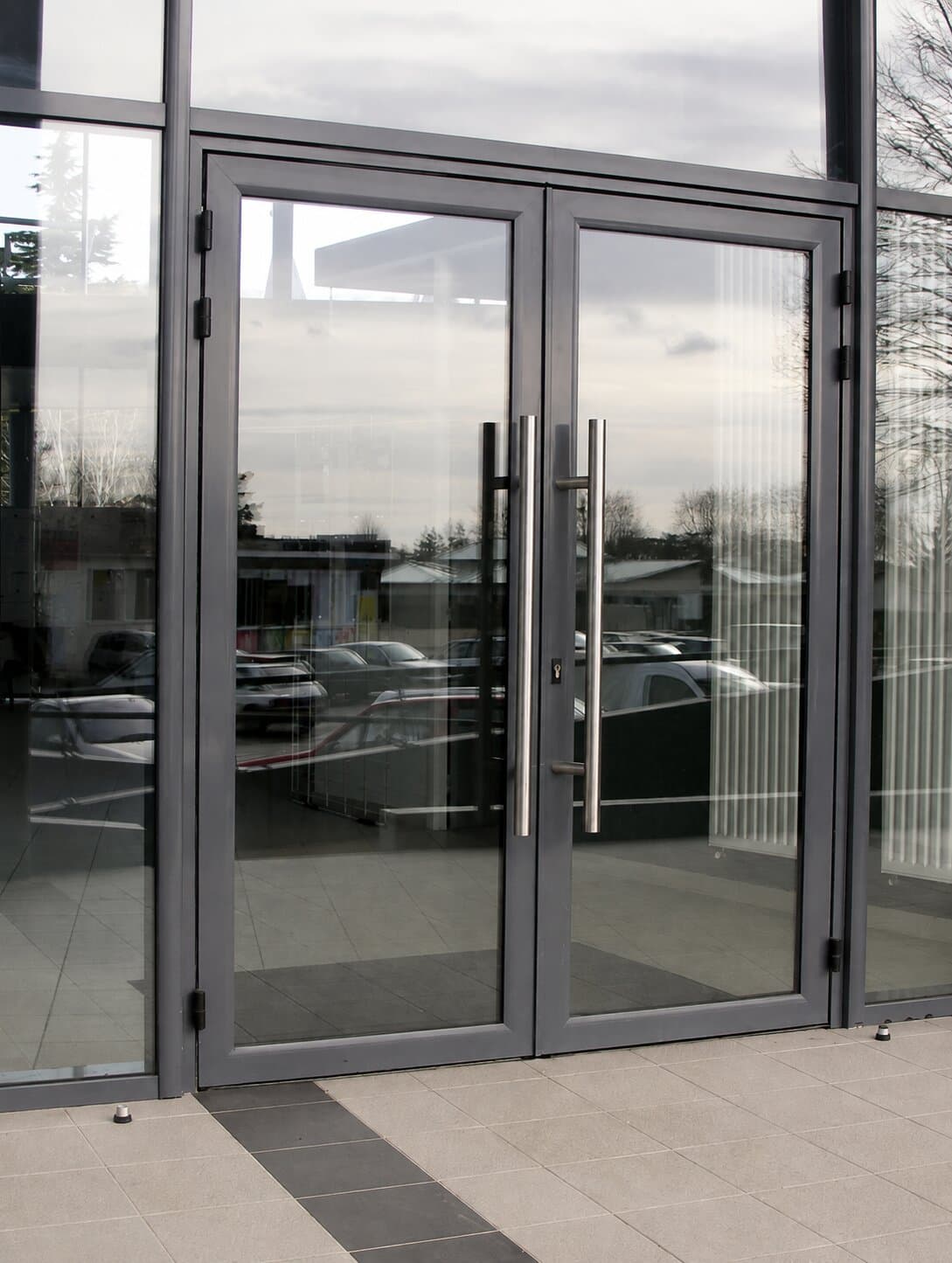
A fire resistant door is a tested assembly, not a catalogue item. The leaf, frame, intumescent seals, glazing, hinges, latch and self-closing device earn their certificate together as one system; change a single component and the rating no longer describes what you install. In Saudi commercial projects the difference between a compliant door and a failed one shows up at Civil Defense inspection, or in a real fire. This 2026 guide covers what EI60 and EI90 actually promise, what the Saudi Building Code requires, current costs and how these assemblies perform in our heat and dust.
Buyers in Riyadh, Jeddah and Dammam specify rated aluminum doors for lobbies, corridors, stair enclosures, electrical rooms and commercial kitchens. Almost every failure we see traces back to decisions made before the order: a rating chosen from a brochure, glazing swapped for a cheaper pane, or hardware that never appeared in the original fire test.
EI60 and EI90 explained
Saudi specifications lean on the European classification behind EN 1634 testing. E stands for integrity: the door stops flames and hot gases. I stands for insulation: the unexposed face stays below a set temperature for the whole rated period. EI60 holds both for 60 minutes, EI90 for 90. A door rated E only blocks flame but radiates heat, which is rarely acceptable on escape routes where people pass close to the leaf.
The rating belongs to the complete assembly. A 90-minute leaf on a 30-minute frame is a 30-minute door, and cheaper seals or glazing beads quietly void the certificate. When comparing EI60 and EI90 doors, ask for the third-party test report for the exact model combination being supplied — manufacturer, frame profile, glazing, hinges, closers and seals. A catalogue page is not a test report.
SBC 801 and the Civil Defense file
The Saudi Building Code sets fire-resistance requirements in SBC 801, which references international test standards such as EN 1634 and UL. Stair enclosures, exit corridors, electrical rooms, commercial kitchens and mechanical rooms generally require rated doors with self-closing devices and positive latching. The duration — 60, 90 or 120 minutes — depends on occupancy type, building height and the compartment being protected.
Civil Defense approval compares the installed doors against the approved shop drawings and the certificate file. In practice: name the exact model in the specification, keep one certificate per door type, and check deliveries against the drawings before installation. Mismatches surface at inspection, and rework on fire doors means new frames — not a fresh coat of paint.
Fire rated glass in Riyadh
Glazing is the weakest link in most fire door specifications — and the most visible one. Two families dominate: wired glass, inexpensive and able to hold integrity for 60 to 90 minutes but non-insulating and fragile; and ceramic or special laminated glass, which delivers EI performance with better clarity and can carry low-emissivity coatings. In Riyadh, where every square metre of glass adds cooling load, that coating matters.
Inspect the glass marking for classification, duration and test standard, and remember that beads, gaskets and seals belong to the tested assembly. In Riyadh projects, fire rated glass is commonly specified alongside the door in sidelights and vision panels — choose a tested system from a single manufacturer so the door, the glass and the seals share one certification.
Aluminum or steel doors
Steel is still the default for 120-minute ratings and heavy industrial traffic, but engineered aluminum systems now cover most commercial applications. Extruded aluminum frames with intumescent seals and fire rated glazing reach EI60 and EI90 at roughly half the weight of steel, with slimmer sightlines, concealed closers and factory powder-coat finishes that suit contemporary lobby design.
For offices, hotels, clinics and mixed-use towers, an aluminum EI60 or EI90 door satisfies the code, installs faster on standard walls and avoids the thick frames and visible welds that make steel doors read as industrial. Steel remains the honest choice for very large double-leaf openings and 120-minute compartments.
What fire rated doors cost in 2026
For 2026 budgeting: a single-leaf EI60 steel door with frame, self-closer and hardware typically runs 1,800 to 3,500 SAR supply-only; an aluminum EI60 door with fire rated glazing and a vision panel lands between 2,500 and 4,500 SAR depending on size and finish; EI90 and double-leaf configurations add roughly 20 to 40 percent. Glazing is the single largest cost driver — ceramic EI glass costs several times more than wired E glass.
Compare the fully installed assembly: frame, intumescent seals, self-closing device, panic hardware where required, site fixing and the certificate file. A door quoted without its tested frame is not a rated door, and the cheapest quote that fails Civil Defense inspection always costs more than the difference it saved.
Heat, dust and coastal humidity
Riyadh summers exceed 45 degrees Celsius, and door components age differently here than in the European labs where most ratings originate. Intumescent seals must survive years of heat cycling without hardening early; closers and hinges must tolerate dust intrusion; and exposed aluminum needs powder-coat or anodized finishes that resist UV fading and chalking.
Air conditioning creates pressure differences across door openings — a fire door that seals poorly wastes conditioned air and pulls in dust, so adjustable thresholds and perimeter smoke seals matter for energy bills as much as for fire. In coastal projects in Jeddah and Dammam, specify marine-grade hardware and PVDF or anodized finishes so humidity and salt air do not attack the assembly before its first maintenance cycle.
Specify it right with Ramz Al Badran
Write the rating, test standard, glazing classification and hardware into the specification; require submittals with third-party certificates for the exact assembly; and verify delivered doors against approved drawings before installation. These three steps prevent the most common failure: a door that looks right with no test evidence behind it.
Ramz Al Badran manufactures fire rated aluminum doors and fire rated glass assemblies at its factory in Riyadh — EI60 and EI90 configurations with certified hardware, tested glazing and factory powder-coat finishes, supplied and installed by our own teams for commercial projects across the Kingdom. Our engineers review your specification, the ratings and the Civil Defense submittal before anything is fabricated, so the door you approve is the door that passes inspection.