
5 August 2026•5 min read
Choosing Fire Resistant Doors for Saudi Commercial Projects
Practical guidance from Ramz Al Badran's factory in Riyadh on fire rated aluminum doors Saudi Arabia — what to specify, what it costs and how it performs in the Saudi climate.
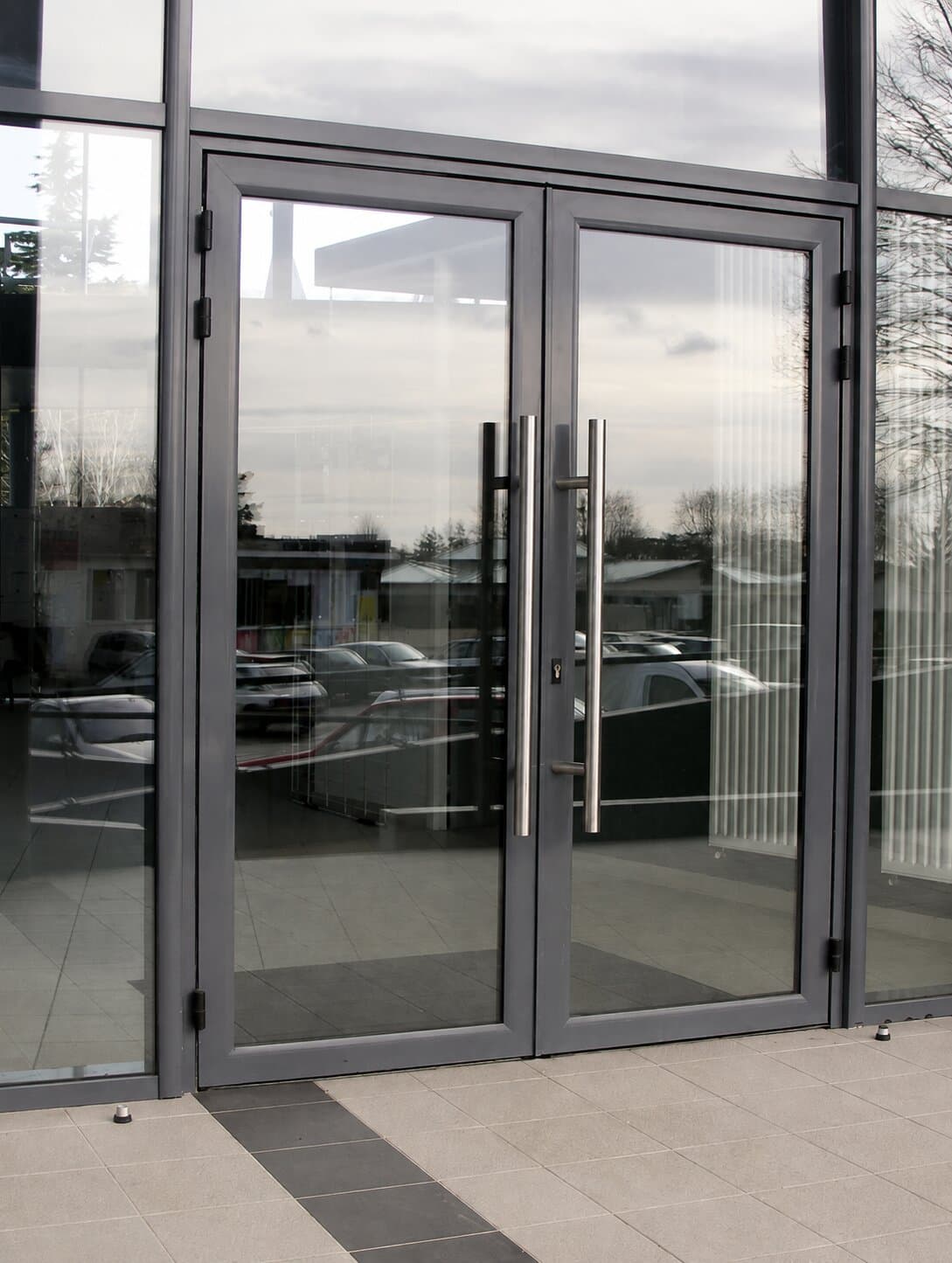
Why fire rated doors matter
A fire door does one job: it holds back fire and smoke long enough for people to leave the building and for fire teams to work. In a commercial project in Saudi Arabia — an office tower, a hotel, a hospital — those minutes are defined by the Saudi Building Code, and the door's fire-resistance rating decides how many of them you get. Specifying the wrong door is not a cosmetic mistake; it is a compliance and safety failure that shows up at inspection, and worse, in a real fire.
EI60 and EI90: what the rating means
Ratings such as EI60 and EI90 come from the European EN 1634 test standard, widely referenced in Saudi projects. E stands for integrity — the door keeps flames and hot gases from passing through. I stands for insulation — the unexposed side stays below a set temperature limit. The number is minutes: an EI60 door holds for 60 minutes, EI90 for 90. Most commercial corridors and stairwells in Saudi projects are specified at EI60, while high-risk areas such as escape stair enclosures and plant rooms often require EI90.
Both ratings need a certified test report, not a brochure claim — and the certification must cover the complete assembly: door leaf, frame, seals, glazing and hardware as one tested unit. A rated door leaf fitted with unrated hardware is not a rated door.
Aluminum vs steel fire doors
Steel has dominated fire doors for decades, but aluminum is now a serious alternative for Saudi commercial projects. Extruded aluminum frames with intumescent seals and fire rated glass can achieve EI60 and EI90 ratings at a lower weight, with cleaner sightlines and better corrosion resistance in coastal cities such as Jeddah and Dammam. The catch is execution: an aluminum fire door is only as good as its profile system, its seals and the fabricator's precision.
Powder coating, thermal break options and concealed closers also make aluminum an easier match for modern lobby and corridor designs, which is why architects in Riyadh increasingly specify aluminum fire doors for commercial interiors.
Fire rated glass and vision panels
Fire rated glass is the most common specification mistake in Saudi projects: ordinary tempered glass is not fire rated glass. Ceramic and wired glass products carry their own integrity and insulation ratings, and a vision panel in a fire door must be tested as part of the door assembly — never assumed compatible. In Riyadh, where most commercial doors are specified with glazed sidelights or vision panels, the practical rule is to choose a tested system from a single manufacturer so the glass, frame and seals share one certification.
Fire rated glass also behaves differently from standard glass under heat — it can crack and still hold in place — which is why installation tolerances and the correct glazing gaskets matter more than they do on ordinary doors.
Saudi building code and climate
The Saudi Building Code (SBC 801) sets the fire protection requirements for commercial buildings, and municipalities enforce them at permitting and inspection. Door ratings, self-closing devices and smoke seals are checked on site, so the delivered door must match the certified assembly exactly. Climate adds a second layer: in Riyadh's summer heat, door frames expand and intumescent seals can degrade under extreme temperature cycles; in coastal Jeddah and Dammam, humidity and salt attack frames and hardware.
Specify powder-coated finishes, stainless steel or corrosion-treated hardware, and have the seals checked during periodic maintenance — a fire door with a dried-out seal no longer meets its rating.
Hardware: self-closers and smoke seals
A fire door's rating means nothing if the door is left open. Self-closing devices are mandatory on rated doors in Saudi commercial buildings, and they must be certified with the door assembly. Electromagnetic hold-open devices linked to the fire alarm are permitted in corridors — they release the door on alarm, and need certified release and closing action. Smoke seals, intumescent strips that expand when heated, close the gap between door and frame; in some assemblies a separate perimeter smoke seal is required to stop cold smoke before fire arrives.
Hardware is also where budgets get cut, and it is the wrong place to save: specify certified closers, panic bars where exit paths require them, and hinges rated for the door's weight — a sagging door fails its integrity test long before any fire does.
What a fire rated door costs
Fire rated doors cost several times more than standard aluminum doors, and the price is driven by four things: the rating (EI90 costs more than EI60), the glass specification, the hardware — certified self-closers and panic devices — and the certification itself, which a compliant manufacturer must hold for each assembly. In Saudi Arabia expect a clear per-door premium over non-rated doors, with vision panels and sidelights adding the most.
Budget realistically: a cheap fire door that fails inspection must be replaced, and the replacement cost plus the project delay always exceeds the saving.
Buying from a Riyadh manufacturer
Buy fire doors from a fabricator that can show certified test reports for the exact assembly you are buying — leaf, frame, glass, seals and hardware as one system. Ask about in-house fabrication, lead times, installation teams, and whether the delivered doors match the tested configuration. Also confirm how the door performs in Saudi conditions: finish durability, seal life and hardware warranty in local humidity and heat.
Ramz Al Badran manufactures fire rated aluminum doors from its factory in Riyadh, supplying certified assemblies with vision panels, self-closers and installation for commercial projects across the Kingdom — one accountable party from test report to handover.