
29 August 2026•5 min read
Aluminum Pergolas for Saudi Villas: Shade That Lasts
Practical guidance from Ramz Al Badran's factory in Riyadh on aluminum pergola Saudi Arabia — what to specify, what it costs and how it performs in the Saudi climate.
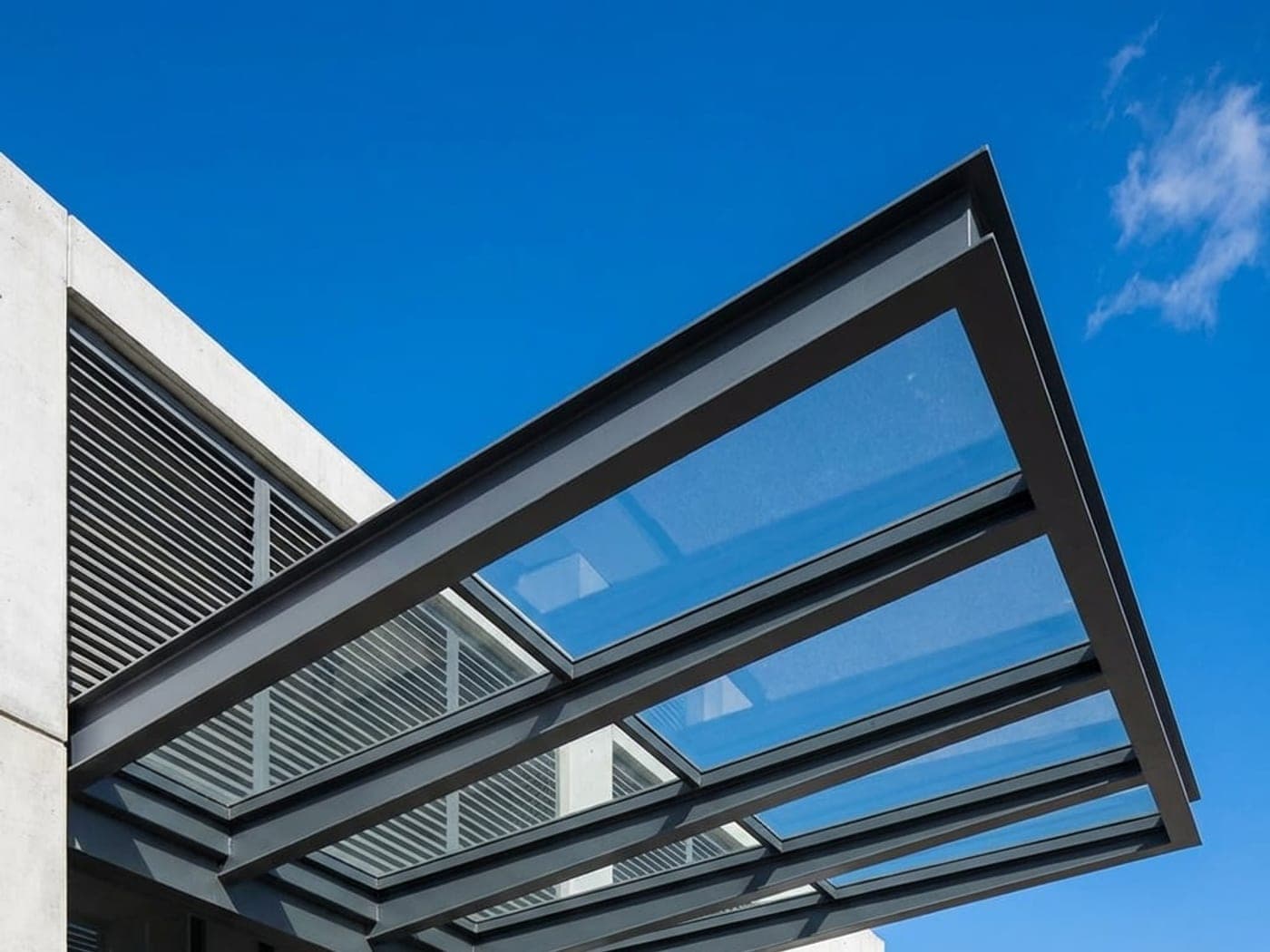
Why Aluminum Outlasts Wood and Steel in the Saudi Climate
A villa pergola in Saudi Arabia lives a hard life: summer temperatures above 45°C, intense UV, dust storms and occasional heavy winter rain. Wood responds to that environment by warping, cracking and attracting termites, and it needs repainting every couple of years. Galvanized steel resists rust only until the coating is scratched at a cut edge or a bolt hole — then corrosion starts where you cannot see it.
Aluminum has none of those failure modes. It does not rust, it stays dimensionally stable across the daily swing between a 45°C afternoon and a cool desert night, and a good powder coat keeps its color for years. That is why aluminum is the default choice for outdoor shade structures on Saudi villas — and why a pergola built from the right profiles is a fit-once, forget-for-a-decade purchase.
Designing for the Sun: Orientation and Shade Timing
Where the pergola sits matters more than how it looks in a brochure. The east side of a villa gets strong morning sun that is relatively easy to block, while the west side receives the harshest afternoon heat — the side where family gatherings and evening outdoor time actually happen. A pergola on a west-facing terrace works harder than any other position, so the roof system there should give denser, more complete shade.
Plan the shade pattern before ordering: measure the terrace at the times you will use it, and note where the sun enters at 4 p.m. in summer. A fixed-louver roof angled toward the south-west blocks the low afternoon sun while letting hot air escape upward. Getting the orientation and blade angle right is free — it just needs to happen before fabrication, not after installation.
Wind, Dust and the Saudi Building Code (SBC)
Riyadh's wind loads are real, and they are defined in the Saudi Building Code. Even a modest villa pergola acts like a sail in a dust storm: the code requires outdoor structures to be engineered for uplift, overturning and lateral wind pressure, with columns sized to their tributary area and base plates bolted into a reinforced concrete slab. Attached pergolas add a wall-fixing line that must resist uplift at the connection.
The common failure pattern in Saudi villa gardens is not the roof — it is the anchor. Posts bolted to paving tiles, shallow footings or undersized base plates are what let a storm lift a pergola or a sand-laden wind push it out of square. Ask your supplier, in writing, for the SBC wind-load basis used in the design, and confirm the slab and anchors are included in the scope before you sign.
Profiles and Finishes: What "Aluminum" Actually Means
Not all aluminum is equal. Structural pergola profiles are extruded from 6063 alloy in the T5 or T6 temper, with wall thicknesses typically between 1.5 and 3 mm depending on span. Furniture-grade or thin-walled sections bend under load and make doors and louvers bind after a season of thermal movement. Ask for the profile section and wall thickness in writing on every quote.
The finish decides how the pergola looks in year five. Polyester powder coating in a UV-stable grade, applied over a proper pretreatment, is the standard for Saudi exposure; cheap coatings chalk and fade within two seasons. Fasteners should be stainless steel, cut edges should be sealed, and the coating should carry a written warranty — those details are the difference between a pergola that lasts and one that needs repainting.
Choosing the Roof: Louvers, Solid Deck or Fabric
The roof is the heart of the pergola, and the choice comes down to how you use the space. Fixed aluminum louvers are the best all-rounder for Riyadh: they block 80–90 percent of direct sun, let heat escape between the blades, shed dust quickly in rain and need no maintenance. A solid insulated deck gives complete shade and a finished ceiling — ideal over a dining table or an outdoor kitchen — at a higher weight and price.
Retractable fabric roofs offer flexibility and a soft look, but fabric is the weakest link in a Saudi climate: UV degrades it, dust collects in the folds and replacement is needed every few years. If you want retractable, budget for the replacement cycle. And whatever the roof type, include a drainage plan — winter cloudbursts in Riyadh can drop more water in an hour than the roof was ever expected to handle.
What a Villa Pergola Costs, Installed, in 2026
From our fabrication floor in Riyadh, a powder-coated aluminum pergola with a fixed louver or battened roof runs roughly SAR 450–700 per square meter supplied and installed, excluding the concrete slab. A solid deck roof, heavier profiles or longer spans push that to about SAR 700–1,100 per square meter, and motorized adjustable louvers sit at the top of the range.
A typical villa pergola is 16–24 square meters — say 4 x 4 to 4 x 6 meters. Installed, that lands between roughly SAR 8,000 and 20,000 depending on roof type and options. Treat any quote far below that range as a reason to check the spec — wall thickness, coating warranty, and whether anchors, drainage and electrical work are included — rather than as a bargain.
The Villa Owner's Installation Checklist
Before installation day, confirm three things: the slab is poured and cured with the anchor layout marked, access for the delivery truck and materials is clear, and electrical points for lighting, ceiling fans or motorized louvers are in place if you want them. Decide drainage at the design stage so water from the roof is directed away from the terrace rather than across it.
On the paperwork side, get a written scope: supply, installation, anchors, slab work if included, electrical work, cleanup and a payment schedule tied to milestones — a deposit, a fabrication-stage payment and a final payment on completion. A supplier who itemizes the scope is a supplier who intends to finish the job.
Pergolas Built in Riyadh by Ramz Al Badran
Ramz Al Badran designs, fabricates and installs aluminum pergolas and outdoor shade structures at our factory in Riyadh — from licensed profile systems, with in-house structural design, powder coating and installation crews. Because we fabricate what we install, you get an itemized quote based on actual material and labor, and a structure engineered for Saudi wind loads and UV rather than a generic import.
Send us your terrace dimensions and photos, or visit the factory to see the profiles and finish options in person. We will return a fixed, itemized price and a schedule — and the pergola you approve on paper is the one that gets built, anchored and handed over ready for the summer.